Pooling to the NExT level.
On-demand ride-pooling, DRT, feeders
NExT pods join your fleet as single units or convoys.
Road-legal, electric, on the road today.
The numbers for an operator
Parallel pooling
In classic ride-pooling every detour stretches everyone's ride, and re-sorting passengers takes fixed hubs: alighting, waiting, re-boarding.
With NExT, pods dock where needed. The intervehicular doors open, passengers redistribute by destination without getting off, the modules split: each on the most direct route.
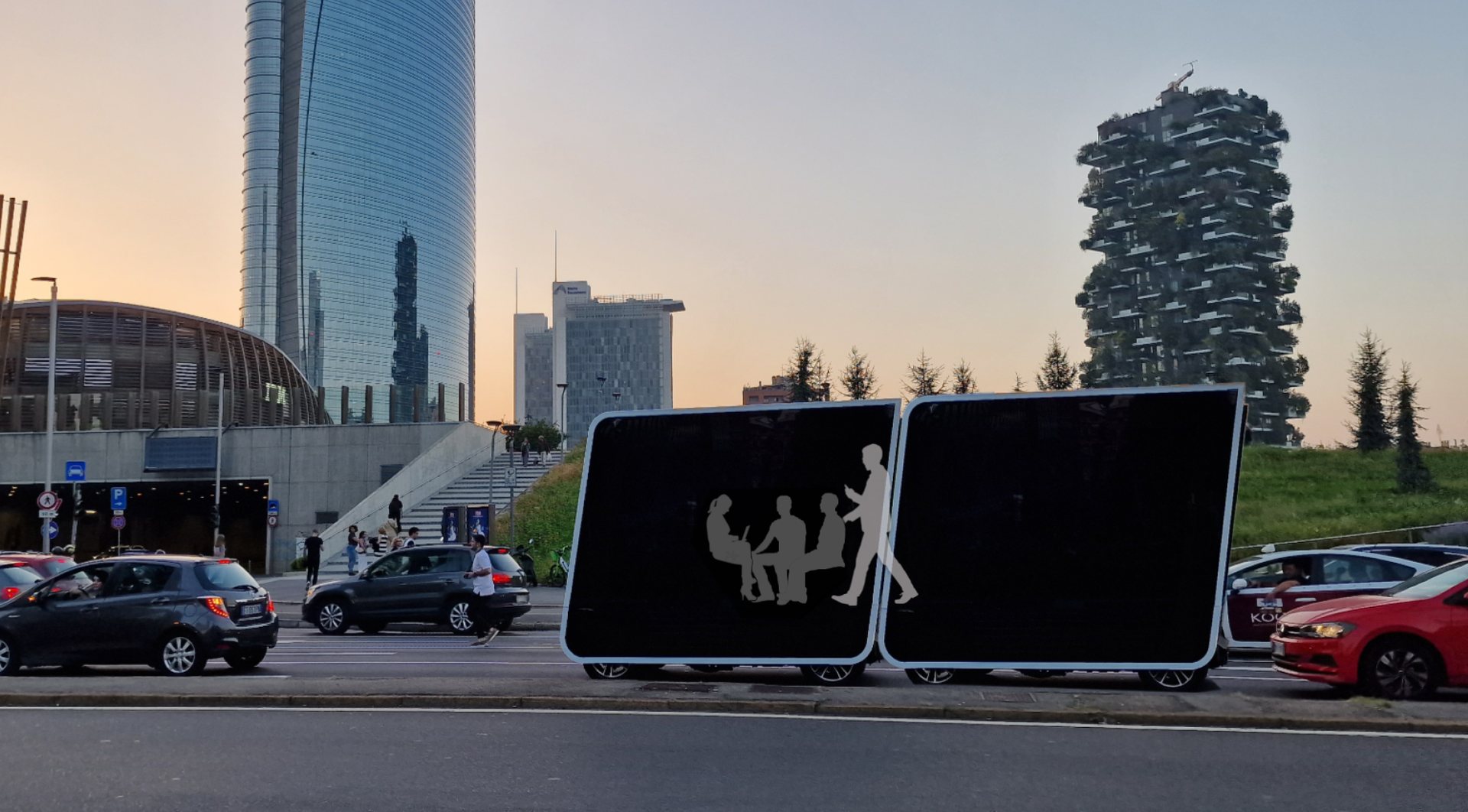
Passenger exchange between docked modules
The exchange point is dynamic: the NExT MaaS Platform picks it, only if and where it pays.
The average fill rate rises (around 2x) and the economic advantages are clear even with one driver per pod (compared to taxis and standard ride-pooling).
Two electrons exchanging a photon, in Feynman notation
“I’m often asked where the idea for NExT came from, the intervehicle transfer in particular. I have to admit that my Physics studies in Padua were illuminating. Just as particles in Feynman diagrams exchange quanta of energy, in NExT the pods exchange the ‘quanta of mobility’: the passengers. Optimizing transport, then, becomes a matter of solving a physics problem.”
Tommaso Gecchelin · Founder and CEO
Transfer between modules lets you split, consolidate or reorganize loads, wherever it makes sense.
Split. A pod with two destinations on board docks with the waiting module: those branching off change modules, and everyone continues nonstop to their own destination. It is the geometry of the last-mile: from the trunk connection to passenger distribution across the surrounding area.
Consolidation. The mirror-image scheme: two pods bound for the same destination join up, one continues full, the other stays at the node for the next run. It is the geometry of the first-mile: pickups spread across the area, one full shuttle to the airport.
Double exchange. Reorganization between modules: different destinations in, sorted convoys out
Intervehicle transfer is already demonstrated on the road: the real footage.
Compared
| Classic pooling | NExT · parallel pooling | |
|---|---|---|
| Transfer | Get off, wait, re-board | Change module between coupled pods, no getting off |
| Exchange point | Fixed hub | Dynamic, chosen by the platform |
| Detours | Shared, a round trip for all | None, each pod goes straight |
| Capacity | Fixed (van) | Follows demand, 1 to 5 pods |
| Vehicle travel cost | Baseline | Up to −52% (Fu & Chow 2023) |
| Driver | With driver | With driver today, L4 in development |
The same service, two geometries
Shuttle layouts
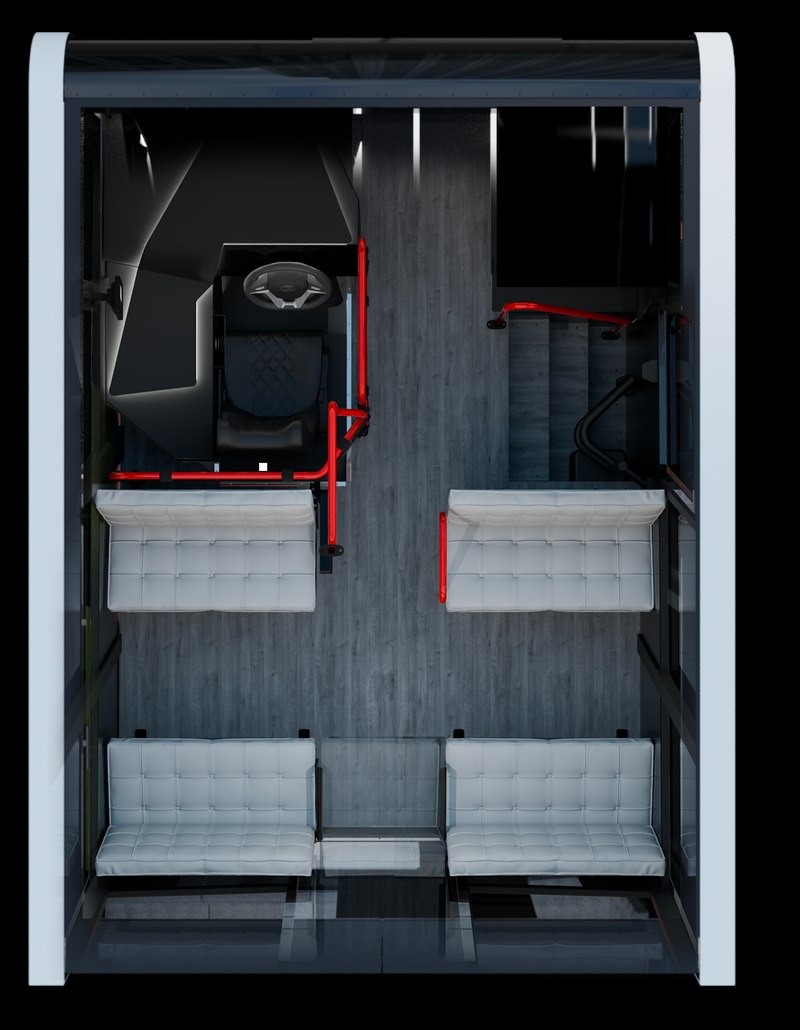
Shuttle M2 · class A
9 seats + 7 standing + driver. Maximum capacity for high-turnover stretches.
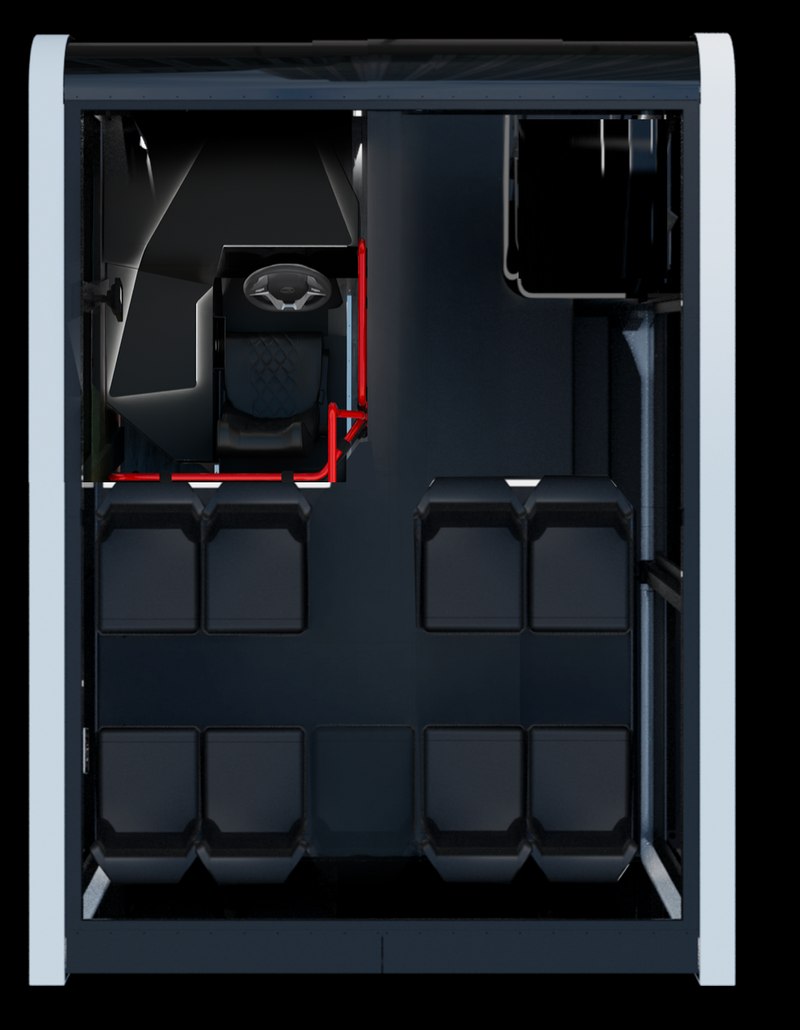
Shuttle M2 · class B
9 seats + driver, everyone seated. 900 litres of baggage space for feeders and airport links.
Dimensions, battery, CCS2 charging: the full technical sheet.
The NExT MaaS Platform
With the NExT MaaS Platform, our fleet simulation and management software, you can compare your current operation with the NExT solution before deployment.
Request a demo or a study dedicated to your needs. It's one of the four tools in the NExT software suite.
NExT MaaS Platform · built in-house
The scientific base is public: over 80 peer-reviewed studies on modular systems, with quotes and sources.